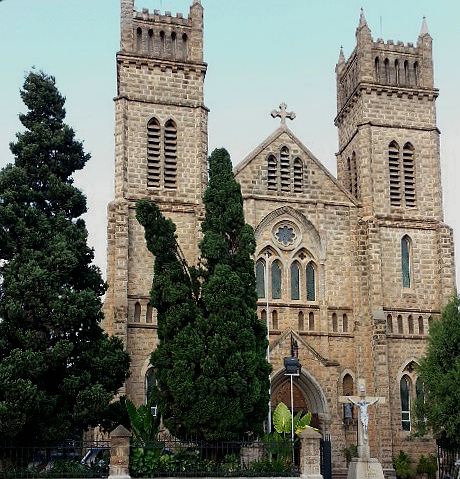
Taken from Republic of Zimbabwe: Law and Religion Framework Overview (2018) by Andrew Birkinsha
A country with a population of around 14 million, the Republic of Zimbabwe is located in Southern Africa, between South Africa, Zambia, Botswana, and Mozambique. It was settled by the Shona and Ndebele people who make up the majority of the population. Zimbabwe’s legal system, with the exception of its Criminal Law which is codified, consists of a common law system. More correctly stated according to local counsel, Zimbabwe has a hybrid or plural legal system in the sense that the law currently in force was adopted from foreign jurisdictions and imposed into the country by settlers during the colonial era. The legal system thus consists of the aforesaid common law (unwritten Anglo Roman Dutch Law), the Constitution of Zimbabwe, Legislation, case law and customary law as sources.
The Republic of Zimbabwe gained its independence from the United Kingdom in 1980. The United Kingdom had annexed Zimbabwe (formerly Rhodesia) from the British South Africa Company in 1923. In 1965 the white minority declared independence from the UK , but this act was not formally recognized and the UK demanded Rhodesia provide more complete voting rights to the black African majority . In response to Rhodesia’s refusal, UN sanctions were enacted and the Zimbabwe African People’s Union (“ZAPU”) and the Zimbabwe African National Union (“ZANU”) armed themselves to gain national liberation. Conflict ensued between the Rhodesian and guerilla forces until, in 1980, the guerilla forces gained independence. The leader of ZANU, Robert Mugabe, was elected as Prime Minister from 1980-1987 and then President from 1987-2017. His rule was marred by many crises including allegations of election tampering , economic instability and food shortages caused partly by the land reform program , and a drastic loss in the potential growth for Zimbabwe as a result of his many policies . In 2017 Mugabe was forced to resign after being put under house arrest by the military. Emmerson Mnangagwa took over as President of Zimbabwe until elections can be held in July of 2018.
RELIGIOUS CONTEXT
According to the 2010-2011 nationwide Demographic and Health Survey, 84.5% of Zimbabwe is Christian, 13% report no religious affiliation, 2% adhere to traditional beliefs, and less than 1% is Muslim. Of those that denotes themselves as Christian, 33.5% claim to be Apostolic, 18% Pentecostal, 15.5% Protestant, 9% Roman Catholic, and 8% other Christian.
Even though Zimbabwe is a country with an authoritative (particularly for the greater part of Robert Mugabe’s rule, but it is probably not a correct statement with respect to the current government which has increased freedoms for the people, and violations of rights have reduced significantly) and sometimes ineffective government, the religious freedoms and liberties of its citizens has in general been protected. There exists some evidence of the government targeting groups it perceives to be critical of its actions.
SOURCES OF LAW AFFECTING RELIGION
a.CONSTITUTIONAL LAW
Zimbabwe has a long history of constitutional development with a number of constitutions and amendments being created over the last 60 years. In 2013 Zimbabwe passed their current constitution by referendum. Section 56 of the constitution protects against unfair discrimination but does provide the state leeway in determining whether the alleged discrimination was “fair” based on principles of “openness, justice, human dignity, equality, and freedom.” Section 60 allows for the freedom of conscience and the ability to “practice and propagate” their belief in public or private, along or with others. It further protects individuals from having to take an oath contrary to their belief system or in a manner contrary to the same and allows parents the right to determine moral upbringing of their children insofar as it doesn’t prejudice the children’s rights to, among others, education, health, safety, and welfare. Article 61 of the constitution protects the freedom of expression. Individuals are allowed under this section to seek, receive and communicate ideas.
The constitution however does provide language allowing for the limitation of these rights and freedoms in Articles 86 and 87. Article 87 allows for limitations during a public emergency while article 86 provides the framework for limitations at any other time . Any exercise of this power must not exceed what is required to achieve the government’s purpose.
Section 72 allows for the government to acquire agricultural land without compensation when required for public purposes therein stated, that is, settlement for agricultural or other purposes, and reorganization, forestry, environmental conversion or utilization of wild life or other natural resources. Section 71 allows for individuals to obtain land outside of the exception carved out by section 72.
b.STATUTORY LAW
The Public Order and Security Act (“POSA”) provides some limited police powers to the state. It allows for certain limited restrictions on freedom of assembly, expression, and association. The powers of the police and other state actors have been severely curtailed by the provisions of sections 58 and 61 of the Constitution.
The Children’s Act requires parents “to provide or pay for dental, medical, or surgical aid” in section 7. There is no religious exemptions to these laws.
- The law does not require registration of religious groups. However, religious groups can register as a non-profit or charity organization under the Private Voluntary Organizations Act which prescribes the registry of non-governmental organizations. Any local private voluntary organization (“PVO”) must apply for registration through the District Social Services Officer in the area where their headquarters is located. International PVO’s must submit a signed Memorandum of Understanding (“MOU”) with the “government ministries relevant to their area of technical operations.” The MOU is then submitted to the Registrar of Private Voluntary Organizations Head Office along with a curriculum vitae and Interpol certificate for the country representative when that representative is of foreign origin or a local police clearance when the country representative is a citizen or permanent resident, the proposed area of geographic coverage, and the period of financial year for the organization.
c.ADMINISTRATIVE LAW
Under the Zimbabwe Revenue Authority, Churches and religious organizations may have tax obligations. Religious organizations may be exempt from income tax on receipts and accruals and from the capital gains tax when selling specified assets (immovable property, shares, and other securities). Religious organizations are required to pay a number of withholding taxes which include non-residents tax on fees, non-residents tax on royalties, non-residents tax on remittances, and withholding amounts payable under contracts. Additionally, religious organizations are required to withhold employees tax from remuneration paid and pay a value added tax when selling goods or serviced amounting $5000 per month or $60000 per annum. Goods include accommodations for rental purposes.
In April of 2016 the Minister of Primary and Secondary Education issued a directive suspending the activity of a popular bible study group, Scripture Union (“SU”). The study group stayed active as it collaborated with the ministry and in December of 2017 the Minister provided clarification that SU has not been banned, but that their activities would not be allowed to affect the smooth flow of main classes and would be considered extra lessons.
d.LEADING CASE LAW
In Dzvova v. Minister of Education Sports and Culture the Supreme Court of Zimbabwe ruled that a student could not be expelled on the basis of his Rastafarian dreadlocks. The schools in Zimbabwe require uniform dress and grooming standard and argued that there were not religious exceptions. The boy refused to comply and was subsequently expelled.