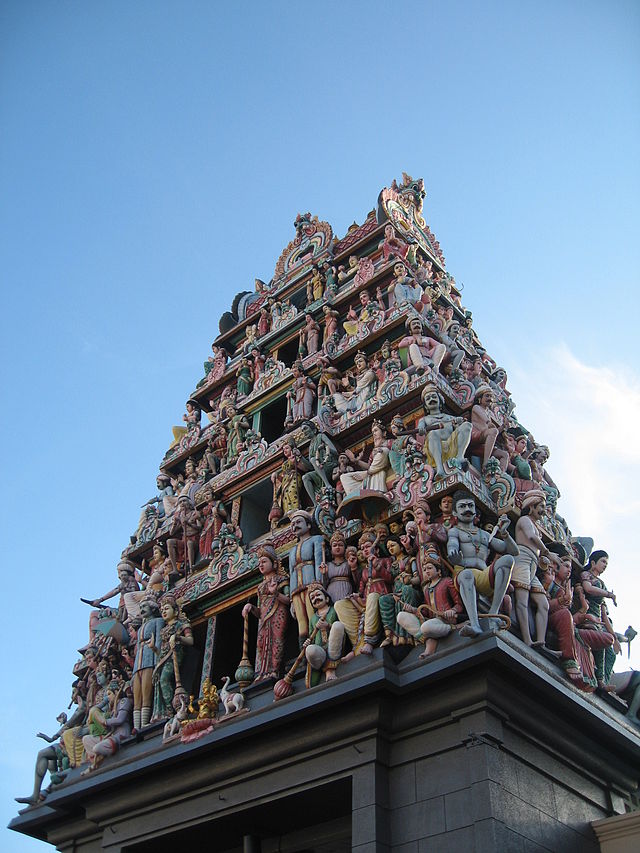
Singapore is a sovereign city-state located in Southeastern Asia, bordered by Malaysia to the north and Indonesia to the south. Singapore has a population of approximately 5.6 million people consisting of a variety of ethnic groups, with Singapore citizens and permanent residents comprising approximately 74.3% Chinese, 13.4% Malay, 9.0% Indian (includes Sri Lankan) and 3.2% others.
Singapore was founded as a British trading colony in 1819 by a small British landing party led by then Lieutenant Governor of Bencoolen, Sir Stamford Raffles and Major William Farquhar. It joined the Malaysian Federation in 1963 but was ousted two years later and became independent. After Singapore gained its independence, it became one of the world’s most prosperous countries with strong international trade links , and per capita GDP equal to that of the leading nations of Western Europe.
Singapore is characterized by a diversity of religions. It is estimated that approximately 81.5% of the population in Singapore state a religious affiliation. Approximately 43.2% of the population is Buddhist/Taoist, 14.0% Muslim, 5.0% Hindu, 18.8% Christian/Catholic and 0.6% of other religious groups. Approximately 18.5% of the total population is non-religious.
It is estimated that the ethnic Chinese population includes approximately 42.3% Buddhists, 12.9% Taoists and 20.9% Christians. Nearly all ethnic Malays are Muslim. Among the ethnic Indians, approximately 59.9% are Hindu, 21.3% are Muslim and 12.1% are Christian.
The Constitution of Singapore and other laws and policies protect religious freedom in Singapore. Although the government generally respects the freedom of most religious groups in practice, Jehovah’s Witnesses and the Unification Church in Singapore were deregistered as religious societies under the Societies Act. Aside from these religious groups, the government plays an active but limited role in religious affairs, including participating in efforts to promote religious harmony and tolerance.
The Constitution of Singapore (“Constitution”) provides that every person has the right to profess and practice his religion and to propagate it. However, this freedom of religion is not an absolute one, but is qualified, as the Constitution does not authorize any act contrary to any general law relating to public order, public health or morality. Provisions of the Constitution relate to the rights of religious groups to establish and maintain institutions for religious education for children , and protection from taking part in ceremonies of another religion. Further, the authorization to enact laws inconsistent with the Constitution during a state of emergency does not extend to provisions of the Constitution relating to religion, citizenship or language. The Constitution also prescribes that “[t]he Legislature shall by law make provision for regulating Muslim religious affairs and for constituting a Council to advise the President in matters relating to the Muslim religion”, a result of which the Administration of Muslim Law Act was enacted. This is cogent with the prescription under the Constitution that it is the “responsibility of the Government constantly to care for the interests of the racial and religious minorities in Singapore”, and “shall exercise its functions in such manner as to recognize the special position of the Malays”, particularly to “protect, safeguard, support, foster and promote their political, educational, religious, economic, social and cultural interests and the Malay language”, on account of their indigenous status. . . .
In conclusion, the constitution and certain laws and policies provide and protect religious freedoms in Singapore. However, religious freedoms are often restricted in matters relating to public order, public health and morality given Singapore’s unique and diverse religious composition. In addition, the government plays a limited but active role in religious affairs
Excerpts from Singapore: Law and Religion Framework Overview (2018) (notes omitted). Prepared by Hilda Chan (Dorsey & Whitney). Significant changes/additional text provided by Joseph Chan et al. of Baker McKenzie (Singapore)
For more information see the links below: