(by Cristina Petrisor Wood)
As early as 300 BC, the Dacians inhabited the territory now known as Romania. By 106 AD, the Roman Empire took provincial control of the territory. Throughout the IV and X centuries, Magyars and Saxons continuously invaded the land. The 1400s and 1500s revealed continuous battles refuting the Ottoman Empire invasions. As Ottoman rule weakened, Russian and Austrian forces subsequently wrestled for power in the province. In 1859, Alexandru Ioan Cuza finally succeeded in unifying Moldavia and Wallachia.
Moldavia and Wallachia were formally integrated in 1862 under the name of Romania. Romania received official recognition of independence in 1878. In WWII Romania supported the Axis powers, particularly with the 1941 assault on Russia.
After the war, the USSR pressured the Romanian government to form a communist government (“The Romanian People’s Republic”). This was accomplished in 1947. Dictator Nicolae Ceausescu took command of Romania in a ruthless rule from 1965 – 1989, when he was executed for genocide and other accusations. Previous communist leaders controlled the new republican government until 1996 and continued to play main political roles thereafter. Romania joined NATO in 2004 and the European Union in 2007.
Past communist regimes, doctrines, policies, and government institutions greatly affected religion in Romania.
Religion in Romania:
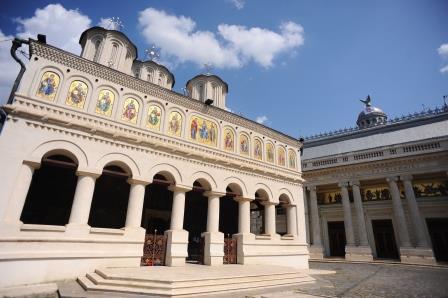
As of September 3, 2011, there are 18 government-recognized religions in Romania. The Romanian Orthodox Church wields most religious influence in the country with a commanding 86% of the population.
Other Minority Religions present in Romania are the Reformed Church of Romania, the Evangelical Lutheran Church, the Unitarian Church, Baptists, Pentecostals, Seventh-Day Adventists, Latter-Day Saints, Zen Buddhists, Hare Krishna, while 24,000 people claim to be atheist or abstain from religion altogether.
Religious Freedom in Romania has firm constitutional authority. It is evident that the post-1989 Romanian government wanted its Constitution to be clear on the subject.
Title II, chapter II, Article 29, of the Romanian Constitution states: Freedom of thought, opinion, and religious beliefs shall not be restricted in any form whatsoever.
- No one shall be compelled to embrace an opinion or religion contrary to his own convictions.
- Freedom of conscience is guaranteed; it must be manifested in a spirit of tolerance and mutual respect.
- All religions shall be free and organized in accordance with their own statutes, under the terms laid down by law.
- Any forms, means, acts or actions of religious enmity shall be prohibited in the relationships among the cults.
- Religious cults shall be autonomous from the State and shall enjoy support from it, including the facilitation of religious assistance in the army, in hospitals, prisons, homes and orphanages.
The government allows religious adherents to worship as they please and supplies capital to government-sanctioned churches in various circumstances. In 2010, the US State Department issued an International Religious Freedom Report, which states:
Religious groups recognized as religions [in Romania] under the law were eligible for state support according to their representation in the census. Additionally, they have the right to establish schools, teach religion classes in public schools where they have a sufficient number of adherents, receive government funds to build places of worship, partially pay clergy salaries with state funds, broadcast religious programming on radio and television, apply for broadcasting licenses for denominational frequencies, have cemeteries, and enjoy tax-exempt status.
In conformity with Law no. 489/2006 on religious freedom and the general status of the cults and religions in Romania, a new legal religious structure was adopted, known as “religious association.” The religious associations have legal entities, but unlike the recognized religions they do not receive government funding; only some tax exemptions. To register, a religious association must have 300 members that are Romanian citizens residing in Romania, and the advisory opinion of the Secretary of State for Religious Affairs.
Full freedom of religion is relatively new in Romania. Indeed, Communist power over the Romanian society from 1948 until1989 greatly limited religious sway in the public sphere. Autonomy of religion was not a main concern for the communist government. This is evident from the fact that as soon as the Communist Regime took power, the confiscation of church property throughout the land began. One report states, “All of Romania’s religious associations were affected by the Communist program of nationalization and confiscation of properties. Many of these properties were turned to secular use…. Altogether, the Communists are said to have confiscated 1,593 churches, schools, and other buildings from the Roman Catholic, Reformed, and Unitarian Churches.”
In the book, Religion and Politics in Post-Communist Romania, Lavinia Stan and Lucian Turcescu analyze these past tensions between Romanian religions and communist law:
Over the short run, the communists aspired to control religion and, where possible, to use religious bodies to advance the programs of the state. The orthodox churches of… Romania proved to be especially amenable to such exploitation. Over the long run, however… most communists hoped that religion would steadily recede into the background, losing its place in the public sphere, and be increasingly seen as institutionalized superstition rather than as a competitive value system, eventually to die a quiet death.
To the dismay of the Communist leaders, the Orthodox Church did not quietly disappear into “institutionalized superstition.” In fact, religion in Romania continued to plague Nicolae Ceausescu’s communist government continuously until 1989. Lavinia Stan and Lucian Turcescu continue their analysis stating,
The relationship between communism and religion was always problematic. There are several reasons for this. First, each religion offers a set of values and, to the extent that a religious body is able to remain independent of penetration by the state, its value system presents itself as an alternative to the value system promoted by the state. Second, religious bodies have their own institutions and hierarchies which cannot so easily be placed under state control. Third, religious bodies offer programs of study (seminary, schools of theology) for those persons interested in working for or with or in the given church. Fourth, religious bodies have their own symbols, songs, and rituals – the cross rather than the hammer and sickle, Jesus Christ and the Virgin Mary rather than Marx and Engels, the “Ave Maria” rather than the “International,” the Holy Mass rather than the meeting of the party cell. To be a religious person, thus, was to be someone who might well be inclined to think in a way different from the way in which the regime wanted people to think; it was, in some sense, to be ranged against the communist state itself.
Despite efforts to relinquish religion, the core ideologies of the Orthodox Church survived during the long era of communism. This lasting sense of ideological autonomy (whether perceived or real), was crucial to the future increase in power of the Orthodox Church in the post-communist era.
1989-Present:
With the fall of the Berlin Wall and the East European communist bloc, Romanian religions received new liberties. For example, the Orthodox Church gained political powers through its supporters. To this day, “the Orthodox Church, which commands the loyalty of around 86% of the Romanian population, remains the country’s most important religious denomination, exerting a considerable sway on local politics.”
Prior to 1989 the Orthodox Church had limited political power. After the Communist government fell, Romanians were looking for a trustworthy state institution to rely on. People needed to find a new sense of ideological confidence. By 1989, the Orthodox Church was recognized as a reliable institution and was due to gain political power.
Under Communism, in spite of all the restrictions imposed by the regime, ecclesiastical institutions maintained a level of autonomy and at least part of their credibility and continuity with their non-communist past. Consequently, after the collapse of the communist dictatorship, religion appeared to many as the only legitimate institutional and spiritual means available to fill the post-1989 ideological vacuum. Religious institutions had to define or redefine their social meaning to effectively address the changing set of contemporary social expectations.
Naturally, as a more democratic republic was established, Romanian religions received more rights and gained more power in the political sphere. The Orthodox Church in particular gained political prominence, leading Romanian politicians to view it as an advantageous environment to secure many votes.
An article posted in The Economist on June 2012 identified the relationship between the Romanian politicians and the Orthodox Church by stating:
So why are some politicians supporting the Church? The Orthodox Church is the most trusted institution in Romania, according to official polls…. Romanian media recently revealed that in some churches in Bucharest and other cities around the country, churchgoers found campaign leaflets next to candles and incense envelopes. Clerics are not making a secret of their political activities. During a recent official visit to Iasi, the biggest city in the north-east part of the country, Victor Ponta, the prime minister, was told by a senior official cleric based there that “they are working so that the mayor could get re-elected with a majority of votes.
Internal politicians were not the only ones that saw the Orthodox Church’s rise in power as advantageous. In September of 1990, The Orthodox Church officially declared “its complete independence of state supervision… [and] began to engage in symbolic politics.” Furthermore, a 1998 article reported that Archbishop Bartolomeu Anania “proposed that the Holy Synod (the ruling council of the Orthodox Church) endorse the political involvement of priests, not only allowing but urging them to become electoral advisers to the public.” The US Department of State 2010 Report furthermore declared, “The Orthodox Church often used its influence to put pressure on small groups and government officials to its own advantage.”
As such, both politicians and internal leaders of the Orthodox Church utilized this atmosphere to fulfill political agendas. To this day, the Orthodox Church commands the respect and loyalty of over 86% of the Romanian population and continues to exercise political influence.