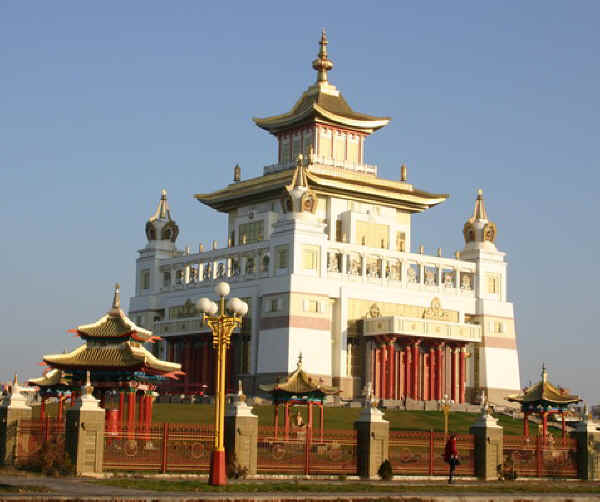
Jens Rassmussen
Religion in Mongolia—including the predominant religion, Buddhist Lamaism—was severely repressed during communist rule. However, since 1990 (with the fall of the Soviet Union) Mongolians have been generally free to practice religion. Although Mongolia has no official state religion, the government gives preference to Buddhism as a matter of preserving cultural heritage. Over ninety percent of the population subscribes to some form of Buddhism. Islam, the largest minority religion in Mongolia, constitutes approximately five percent of the population (living predominantly in the western section of the nation). About four percent of Mongolians are Christian.
The Constitution of Mongolia directly grants the protection of religious freedom to individuals. The government generally respects the practice of religion, however the 1993 Law on Relations between the State and Religious Institutions (“State and Religion Law”) imposes some limitations on proselytizing. This law has proved to be a barrier for some churches to freely teach their doctrines outside of church settings.
Bureaucratic barriers can also hinder religious freedom. Entrance into Mongolia for religious purposes is tightly controlled by requiring a visa specifically for religious personnel and by imposing quotas on the number of individuals an organization may invite into the country. Registration can also be laborious and a potential area for discrimination. Some religious groups were denied registration or faced bureaucratic harassment from local governments. Despite these barriers, especially considering the history of religious freedom in Mongolia, the government generally allows the free practice of religion.
CONSTITUTIONAL PROVISIONS AND ORDINANCES ON RELIGION
The Mongolian Constitution was adopted in 1992 and includes several provisions relating to religious freedom. Articles 9, 14, 16, and 19, directly call for citizens of Mongolia to be guaranteed the right to freedom of conscience, thought, and religion, freedom of association, equality, and the prohibition of discrimination based on religion or association. …
See more at the link below: