Ryan Davis
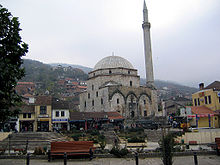
Religion in Kosovo is greatly influenced by the ethnicity of its citizens. Almost 96% of Kosovo’s population identifies itself as Muslim and a majority of Muslims in Kosovo are of Albanian descent. Citizens of Serbian descent generally belong to the Serbian Orthodox church and make up about 1.4% of the population. As a religious minority, the Serbian Orthodox Church has reported infrequent acts of religious discrimination against it including theft and vandalism of its churches and attacks on Serbian Orthodox clergy members. These acts, however, are hard to distinguish as religiously discriminatory because religion is so tied to ethnic descent and the attacks could have been racially motivated.
Legal Protections for Religion
Kosovo’s constitution protects religious freedom, guaranteeing rights of freedom of thought, conscience, and freedom of religion for everybody. The constitution also affirms a separation between religion and government, prohibits religious discrimination, and states that Kosovo has no official state religion. As evidence of the government’s lack of religious affiliation, the country’s official holidays include days holy to both the Muslim and major Christian traditions within the country.
Challenges to Religious Freedom
Significant challenges to religious freedom in Kosovo still exist, however. Because Kosovo’s laws provide no legal mechanism for new religious groups to register in the country, many new churches struggle to own and maintain property or cars, open bank accounts, or pay taxes on the salaries of their employees.
Protestant religions are Kosovo’s smallest minority and make up less than 1% of the country’s population. Many Protestant groups report that they are unable acquire land for cemeteries and churches as their petitions for space go largely ignored by local governments. As a result, Protestants are many times subjected to Muslim funerals in Muslim cemeteries.
Additionally, after rioting in 2004, the Serbian Orthodox Church had 34 properties damaged and NATO forces were called in to protect Serbian Orthodox Church sites. The Kosovo Police force is now tasked with protecting Serbian Orthodox Church sites.
Muslims, however, Kosovo’s majority religion, also report religious discrimination occurring against them. In 2010, Kosovo’s Ministry of Education, Science, and Technology prohibited headscarves from being worn on public school property. This ministry directive has been selectively applied by various schools throughout the country and as many as 14 students have been expelled from school for being unwilling to remove headscarves. The government is currently investigating whether or not headscarves should be allowed in schools.
Positive Steps Forward
In April 2012, Kosovo’s parliament designated certain religious sites in the country as “special protective zones.” Within these zones, laws prohibit activities that could damage the “historical, cultural, or natural environment of the sites.” Three months later, Kosovo’s Constitutional Court upheld the creation of these zones, stating that they do not give special rights to those of Serbian descent simply because they protect many Serbian Orthodox Church sites.
In December 2012, a Special Chamber of the Supreme Court in Kosovo granted ownership of city land to the Serbian Orthodox Church. The land had been disputed since it had been confiscated from a Serbian Orthodox monastery by the government in 1946.
The United States Embassy also funds a “preservation and restoration” program to restore and care for various religiously significant sites in Kosovo.
Sources: International Religious Freedom Report for 2012, United States Department of State, Bureau of Democracy, Human Rights and Labor; “On Freedom of Religion,” United Nations