Bennett Briggs
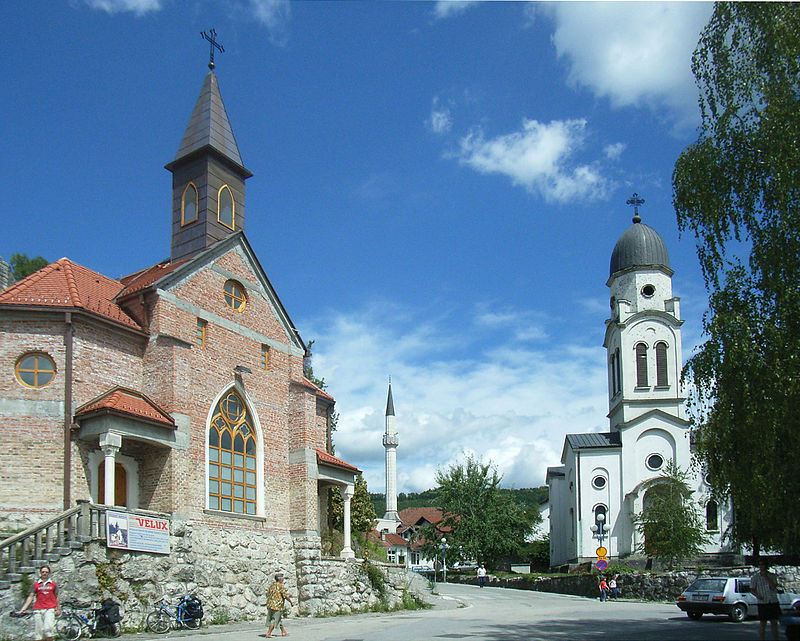
Located on the Balkan Peninsula in Southeastern Europe lies the small Country of Bosnia and Herzegovina, abbreviated BiH, and informally known as Bosnia. With just under 4 million people, much of the religious demography of Bosnia falls within the ethnic and historical background of the people. Bosniaks are generally Muslim, which constitutes about 45 percent of the population, Bosnian Serbs are usually Serbian Orthodox at about 36 percent, and Bosnian Croats are usually Roman Catholic, 15 percent. All other religious make up the remaining 4 percent.
The Country’s constitution guarantees all citizens freedom of religion and is generally upheld. In regards to the rights of full congregations, religious organizations are allowed to open schools, conduct religious education, and engage in commercial and other business activities.
Some problems have arising from the fact that the state specifically protects the rights of the three major ethnic groups (Bosniaks, Serbs, and Croats), and by extension the three largest religious communities. The unintended result however is discrimination against others religious communities that do not fit neatly into the three groups and causes many to openly criticize the government as being selective in their enforcement and protections of all religious people.
By in large though, the disagreements have not resulted in physical violence or persecution, but rather political maneuvering. For instance, some faiths have constructed buildings on land that was owned by other faiths or by the government generally and with the lines between religion and politics being blurred, these cases remained unresolved. Many claim these moves are an effort to show religious and political dominance over the other, particularly smaller, religions.